Hands Up Crazy: A Font That Brings Playful Energy to Your Designs
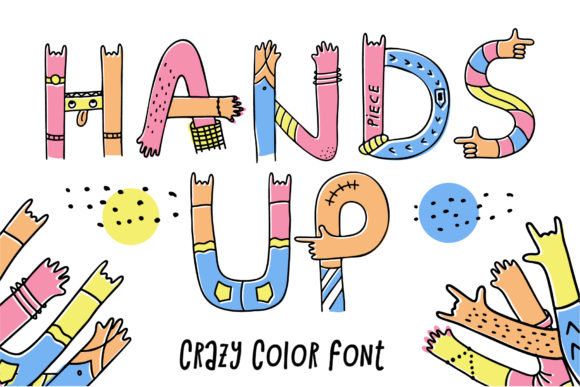
Every designer knows the moment—staring at a project that technically looks good but feels flat, missing that spark of personality that makes people stop scrolling. Sometimes the solution isn't another gradient or illustration style. Sometimes it's a font that refuses to play it safe. Hands Up Crazy is exactly that kind of typeface: a creative, wacky, and unique font born from the spirit of absent-minded doodles and comic book energy, built on modern OpenType SVG technology that brings its playful character to life in full color.
What Makes This Font Different
Unlike traditional typefaces that rely on clean lines and predictable geometry, Hands Up Crazy embraces imperfection intentionally. Each letterform carries the spontaneous energy of a sketch scribbled in the margins of a notebook or a character pulled straight from a Sunday comic strip. The OpenType SVG format means the font isn't limited to flat, single-color strokes—it can display gradients, textures, and multi-color effects directly within the letterforms themselves. That's a significant leap from standard font files, and it opens creative doors that simply weren't available a few years ago.
The font comes in two versions: a vibrant color variant that showcases the full SVG capabilities, and a regular black version for situations where simplicity works better or where software limitations require it. Having both options in one package gives designers flexibility without compromise.
Where Playful Typography Actually Works
There's a misconception that wacky or expressive fonts only belong on children's birthday invitations or novelty T-shirts. In reality, brands across industries are actively seeking typefaces that convey personality, warmth, and approachability. Here's where a font like this genuinely shines:
- Branding and logo design for businesses targeting younger demographics, creative industries, or anyone who wants to signal that they don't take themselves too seriously
- Packaging design for snack foods, craft beverages, toys, stationery, or any product where shelf appeal depends on grabbing attention quickly
- Social media graphics where thumb-stopping power matters more than anything else—a bold, colorful font on an Instagram post or TikTok thumbnail immediately communicates energy
- Website headers and blog graphics for lifestyle blogs, creative portfolios, or entertainment sites that want their visual language to match their content tone
- Poster design and event promotion for concerts, festivals, workshops, or community events where excitement needs to translate visually
- Merchandise and print-on-demand products like stickers, mugs, tote bags, and apparel where unique typography becomes the design itself
- Invitations and editorial layouts for magazines, zines, or digital publications that celebrate creative culture
- Marketing assets and digital products including email headers, course graphics, lead magnets, and promotional materials that need personality without sacrificing clarity
Matching Typography to Your Project Goals
Choosing a font isn't just about what looks cool in a preview. It's about alignment between your visual language and what you're actually trying to communicate. Before reaching for any display font, ask yourself a few practical questions:
Who is your audience? A font inspired by doodles and comics speaks to people who appreciate creativity, humor, and authenticity. If your audience skews toward corporate finance or legal services, this probably isn't your primary typeface—but it might work perfectly as an accent for a more casual sub-brand or campaign.
What's the context? Hands Up Crazy works brilliantly for headlines, titles, and short bursts of text. It's not designed for body copy or long paragraphs, and that's completely fine. Most projects need a hierarchy anyway—a bold, expressive heading paired with a clean sans serif or readable serif font for supporting text creates visual contrast that actually improves readability across the board.
How will it be displayed? Since this is an OpenType SVG font, compatibility matters. It works beautifully in Adobe Photoshop, Illustrator, Silhouette Studio, and Inkscape. However, it's worth noting that the OTF and TTF files are not compatible with Cricut machines. If you're a crafter or small business owner who relies on Cricut for cutting designs, this is an important detail to factor into your decision. For everyone else working in standard design software, the font renders exactly as intended.
Practical Tips for Using an Expressive Font Well
An expressive typeface demands thoughtful application. Here are some real-world recommendations that will help you get the most out of a font like this:
- Pair it with restraint. When your heading font is bold and colorful, let your supporting typography be quiet. A simple sans serif like Montserrat or a classic serif like Georgia provides the perfect counterbalance without competing for attention.
- Test at multiple sizes. Display fonts often reveal their true personality at larger scales. What looks charming at 72pt might feel chaotic at 24pt. Always preview your work at the actual size your audience will see it.
- Consider your color palette. Since the color version of this font carries its own visual weight, make sure the surrounding design doesn't clash. Neutral backgrounds and simple layouts let the typography be the star.
- Use it strategically, not everywhere. A single headline or call-to-action in Hands Up Crazy surrounded by more conventional typography creates emphasis. Using it for every element on the page creates visual noise that works against you.
- Review both included styles. Don't overlook the black version. In certain contexts—printed materials on textured paper, monochrome layouts, or designs where you need to apply your own brand colors—a single-color version gives you more control.
Beyond the Font File: Building Visual Consistency
A premium font becomes a design asset worth investing in when it serves your broader brand identity, not just a single project. If you're a small business owner or content creator, think about how a typeface like this fits into your larger visual system. Could it become the signature font for your social media graphics? Could it anchor your product packaging while a complementary typeface handles the details? Could it define the personality of a specific product line or campaign while your main brand uses something more versatile?
Visual consistency doesn't mean using the same font for everything—it means making intentional choices that reinforce recognition over time. When your audience sees that distinctive, hand-drawn energy across your Instagram posts, your website banners, and your printed materials, they start associating that visual language with your brand specifically. That's the kind of recognition that turns casual viewers into loyal followers.
For designers working with clients, a font like this also opens conversations about brand personality. Showing a client how a playful typeface transforms the feeling of their marketing materials—without changing the copy, the photos, or the layout—demonstrates the real-world power of typography in ways that are immediately visible and easy to understand.
A Note on Licensing and Compatibility
Before incorporating any commercial font into client work or products for sale, verify that the license covers your intended use. Most premium fonts come with clear commercial licensing terms, but it's worth confirming whether your specific use case—whether that's merchandise, digital products, or broadcast media—is included. When in doubt, check the licensing documentation that comes with the font package.
And if you're new to color fonts or OpenType SVG technology, the included Ultimate Font Guide walks through installation, compatibility, and troubleshooting in detail. It's worth a read before diving in, especially if you've only ever worked with standard TTF or OTF files before. Understanding the technology behind the font helps you use it confidently and avoid surprises when your designs move from screen to print.
Typography should be fun, and a font like Hands Up Crazy reminds us of that. Whether you're designing a brand identity for a new startup, creating social media content that needs personality, or building a product line where the packaging tells a story before anyone reads a single word—the right typeface doesn't just display your message. It becomes part of the message itself.