Ancient Echoes in Modern Design: The Aztec Alphabet Font
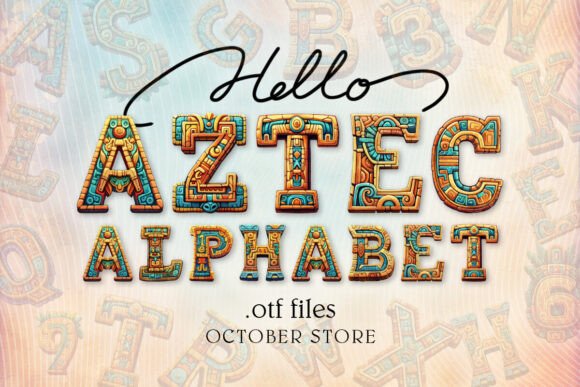
Imagine holding a piece of history in your hands, a vibrant artifact that bridges centuries. The Aztec Alphabet Font isn't just a set of characters; it's a digital tapestry woven with the bold colors and intricate patterns of a powerful civilization. This typeface transforms ordinary text into a visual story, where every letter pulses with the energy of temple carvings and ceremonial art. For designers and creators seeking to inject their projects with undeniable character and cultural depth, this font offers a direct connection to an aesthetic that has captivated the world for generations.
More Than Just a Pretty Face: The Power of a Distinctive Typeface
In a sea of generic sans serifs and predictable serifs, a font like the Aztec Alphabet stands out as a true display font. Its value lies in its immediate ability to establish a mood and a narrative. Think about the last time a piece of packaging or a poster made you stop and look. Often, it’s the typography that does the heavy lifting. This particular typeface, with its Opentype-SVG color font technology, brings multi-hued characters to life in applications like Photoshop and Illustrator. This means your headings can have built-in gradients and textures, saving you time in post-production while delivering a stunning, professional result that feels hand-crafted.
The practical applications are vast and varied. For a craft brewery, it could evoke the earthy, ritualistic origins of its ingredients. A fitness brand might use it to symbolize strength, endurance, and a warrior ethos. In editorial design, a chapter title set in this font can instantly transport readers to another time and place, setting the tone for the content that follows. It’s a premium font choice for projects where standard typography simply won’t suffice, and where making a memorable visual impact is the primary goal.
Strategic Applications for Brands and Creators
Choosing a creative font is a strategic decision. The Aztec Alphabet is not for body text; its strength is in its dramatic flair. Here’s how it can be deployed effectively across different media:
- Logo Design & Brand Identity: A wordmark or monogram using this font can become the cornerstone of a unique brand identity. It works exceptionally well for businesses in the artisanal, adventure, or cultural sectors. Pair it with a simple, clean sans-serif for a balanced and professional presentation that doesn’t sacrifice personality.
- Packaging & Merchandise: On a product label, a tote bag, or a t-shirt, this font becomes wearable art. It communicates a story and a quality that stands out on a shelf or in a social media feed. For merchandise, its bold forms ensure it prints clearly and vibrantly.
- Social Media Graphics & Digital Content: Instagram carousels, YouTube thumbnails, and Pinterest pins thrive on high-impact visuals. Using this font for key quotes, titles, or calls-to-action can dramatically increase audience engagement and shareability. It gives your digital presence a cohesive and striking visual language.
- Event Invitations & Posters: For a themed event, a festival, or a product launch, invitations and posters set with this typeface build excitement and establish the theme before a single word of copy is read. Its visual weight commands attention in both digital and print layouts.
The key is intentional use. Reserve it for headlines, logos, or short phrases where its intricate details can be appreciated without compromising readability. This approach enhances brand recognition because the font itself becomes a memorable visual asset tied to your project’s core message.
Practical Tips for Seamless Integration
Adopting a distinctive typeface like this requires a thoughtful workflow. First, always test the font in the specific software you’ll be using. As an Opentype-SVG font, its full color functionality is best supported in programs like Adobe Photoshop and Illustrator. Always check the included font files and the developer’s guide, such as the mentioned Ultimate Font Guide, to understand compatibility, especially if you work with cutting machines like Cricut.
Font pairing is where the magic of professional design happens. The Aztec Alphabet’s ornate style pairs beautifully with simple, geometric sans-serif fonts (like Futura or Montserrat) or even a classic serif (like Garamond) for contrast. This creates a hierarchy that guides the viewer’s eye: the decorative font for impact, the complementary font for clarity. Never pair it with another overly decorative or script font, as this will create visual chaos and hurt readability.
Consider the context of your project. Is it for a digital screen or a printed brochure? Screen-based projects might call for slightly larger sizing to preserve detail, while print allows for more nuanced exploration of its textures. Always do a test print if your project is physical. This font is a powerful design asset, but like any tool, its effectiveness depends on the skill and intention of the user. By treating it as a highlighter for your most important messages, you leverage its history and artistry to build a stronger, more engaging visual brand.