Baby Clipart: A Typeface That Whispers Sweetness
There’s a unique warmth that settles over a design when the typography feels right—a kind of visual hug that says, “This is for something gentle and joyful.” That’s the immediate, instinctive pull of a font like Baby Clipart. It’s not just a collection of letters; it’s a mood, a whisper of nursery lullabies and the soft crinkle of wrapping paper. For designers, creators, and small business owners working in the world of children’s products, family services, or celebratory events, finding a typeface that embodies innocence and cheerfulness can transform a project from simply informative to emotionally resonant.
More Than Just Cute Letters: The Visual Language of Baby Clipart
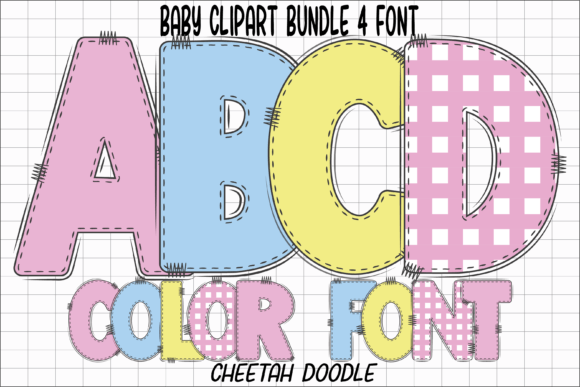
At its heart, Baby Clipart is a display font crafted with intention. Its visual personality is built on gentle, rounded curves and playful, often adorable, details—think of a lowercase ‘a’ with a tiny heart or a ‘b’ that feels like a bouncing ball. This isn’t a font for dense paragraphs of body text; it’s a creative font designed to be a headline, a logo, or a standout element. Its strength lies in its ability to communicate a specific, positive emotion instantly. When you pair this with a clean sans serif font for supporting text, you create a hierarchy that is both visually appealing and functionally sound, ensuring your message is clear while your brand’s personality shines through.
The practical magic of this typeface extends to its technical versatility. The classic black version is engineered for compatibility with popular cutting machines like Cricut Design Space, making it a go-to design asset for crafters and small businesses producing physical goods. For digital creators, the color version opens up even more vibrant possibilities within programs like Adobe Photoshop and Illustrator, allowing for truly eye-catching social media graphics and web design elements. It’s a reminder that a great font is both a creative spark and a practical tool.
From Nursery Walls to Brand Identities: Practical Applications
So, where does a font with this much character truly belong? Its applications are wonderfully specific, solving real-world design challenges for a variety of projects.
- Branding & Logo Design: For a children’s boutique, a daycare center, a baby photographer, or a mompreneur launching a line of organic baby products, this font can become the cornerstone of a brand identity. It sets an immediate tone of trust, care, and joy.
- Packaging & Merchandise: Imagine the font on a label for handmade baby soap, a tag for a knitted stuffed animal, or the design for a child’s t-shirt. It adds that perceived value of craftsmanship and love, which is crucial in competitive markets.
- Digital & Print Marketing: Use it for the headline of a birthday party invitation, the title of a parenting blog post, the cover of a children’s e-book, or the call-to-action on a flyer for a family-friendly event. It grabs attention in a friendly, non-aggressive way.
- Editorial & Educational Materials: In editorial design, it can grace the cover of a family magazine or be used for chapter titles in a parenting guide. For educational apps or worksheets, it makes learning feel approachable and fun.
The key is to match the font’s personality to your project’s goal. It excels where the goal is to evoke warmth, nostalgia, and approachability. Using it for a corporate law firm’s website would be a mismatch, but for a pediatric dentist’s office? It could be the perfect touch to ease a child’s anxiety.
Crafting a Cohesive Visual Story: Pairings and Professional Polish
Introducing a distinctive font like Baby Clipart into your toolkit is just the first step. The real artistry comes in how you use it to build a cohesive and professional presentation. A common pitfall is overuse. Too much whimsy can dilute its impact and harm readability. The professional approach is to use it strategically as a headline or accent font.
This is where font pairing becomes essential. For a harmonious and readable design, pair it with a neutral, clean companion. A simple sans serif font like Montserrat or Open Sans works beautifully for body text, providing a calm counterbalance. Alternatively, a soft, rounded script font could be used sparingly for a secondary tagline to add another layer of sweetness without competing. Always test your pairings by looking at a mock-up of your actual project—a business card, a website header, a product label—to ensure the combination feels balanced and guides the viewer’s eye exactly where you want it.
Before finalizing any design, take a moment to review the font’s full character set. Many premium fonts include multiple styles—like bold or light weights—alternative glyphs, and decorative swashes. Exploring these can unlock unique ways to customize your typography and make your brand identity even more distinctive. And for any commercial project, always double-check the licensing. Ensuring you have the correct commercial font license for your intended use—whether for client work, merchandise for sale, or digital products—is a non-negotiable step in professional practice.
Ultimately, a typeface like Baby Clipart is a powerful tool for visual communication. It does more than spell out words; it conveys feeling, builds trust, and creates an instant connection with a specific audience. Used thoughtfully, it can elevate your creative work, making every project it touches feel a little more heartfelt and a lot more memorable.