Grigio: Injecting Playful 3D Energy into Your Brand
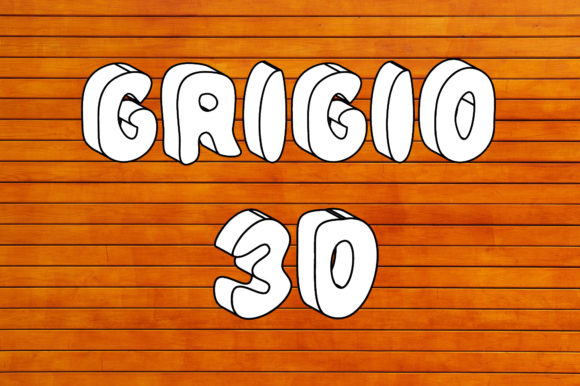
There is a specific moment in design when flat imagery just doesn't cut it anymore. You stare at a logo draft or a social media post, and while the layout is clean, the typography feels lifeless. We are currently seeing a massive resurgence in "dimension" within graphic design—moving away from the strict minimalism of the last decade toward something more tactile, vibrant, and joyful. If you are a designer, small business owner, or content creator looking to break away from standard sans-serifs without sacrificing professionalism, the solution often lies in finding a typeface that bridges the gap between playful illustration and functional text. Enter Grigio, a casual and interesting 3D color font that manages to be cartoon-like and full of joy while maintaining the structure needed for commercial viability.
Understanding the Power of 3D Color Fonts
For years, typography was strictly a vector game. You selected a weight, applied a color from your swatches, and maybe added a drop shadow manually in Photoshop if you were feeling adventurous. The advent of OpenType-SVG technology has completely changed the landscape. This technology allows font designers to embed color data, gradients, and textures directly into the font file itself. When you type a letter using a modern typeface like Grigio, you aren't just getting a shape; you are getting a pre-rendered, high-fidelity 3D object.
What makes Grigio stand out in this growing category of premium font options is its personality. It avoids the "edgy" or "street" vibe of many 3D fonts, opting instead for a friendly, rounded aesthetic. Think of it as the visual equivalent of a welcoming handshake. The shading and depth are baked right in, meaning you get that "pop" off the screen without needing advanced skills in Adobe Illustrator’s 3D effects panel. For the busy entrepreneur or the time-strapped social media manager, this is a massive workflow improvement. You get the visual impact of custom lettering with the speed of standard typing.
Practical Applications: Where Dimension Meets Strategy
It is easy to look at a cartoon-like typeface and assume it is only for children’s birthday invitations. While Grigio certainly excels there, limiting it to that niche would be a missed opportunity. The font's casual confidence makes it a versatile asset across a surprising variety of industries and mediums. The key to using a display font like this effectively is understanding context and hierarchy.
Consider the world of packaging design. On a crowded shelf, a product has about three seconds to grab a consumer's attention. A standard serif font might communicate tradition, but a 3D font like Grigio communicates energy and fun. If you are designing packaging for a snack brand, a beverage, or a children’s toy, this font instantly communicates that the product inside is enjoyable. It creates an emotional reaction before the customer even reads the fine print.
For digital marketing and social media graphics, the stakes are just as high. In a feed dominated by static images and minimalist layouts, a bold, 3D header can stop the scroll. Whether you are creating Instagram stories, YouTube thumbnails, or Pinterest pins, Grigio serves as a focal point that draws the eye. Because the font carries so much visual weight on its own, you often need less supporting design elements to make an impact. This "less is more" approach can actually lead to cleaner, more effective ad creative.
Even in branding, where consistency is king, there is room for this kind of creative font. A brand identity isn't just a logo; it's a system. A brand might use a clean sans-serif for body copy but utilize Grigio for sale tags, promotional headers, or seasonal campaigns. This allows the brand to maintain its professional structure while showing a playful side when the marketing goal calls for it.
Technical Considerations and Workflow Integration
While the creative possibilities are exciting, it is crucial to address the technical side of using OpenType-SVG fonts. As noted in the product specifications, Grigio is compatible with industry-standard software like Adobe Photoshop, Illustrator, Silhouette, and Inkscape. This covers the vast majority of professional and semi-professional design workflows.
However, it is vital to understand the limitations of color fonts. The OTF and TTF files included are not compatible with Cricut machines. For crafters who use cutting machines, this is a common hurdle. While you can use Grigio to design a layout on your computer, the machine's software often struggles to interpret the SVG data required for the 3D effect, sometimes treating it as a standard outline. If you are designing specifically for vinyl cutting or embroidery, you may need to convert the text to outlines and manually simplify the paths, or use the font strictly for print-and-cut projects.
Furthermore, because this is a high-detail asset, it behaves differently than a standard web font. You wouldn't use Grigio for a paragraph of body text on a blog post—the file size would be too large, and the readability at small sizes would suffer. Instead, think of it as a "headline" or "hero" asset. It is designed to be seen, not just read. For more detailed guidance on integrating this type of asset into your workflow, consulting a resource like the Ultimate Font Guide can save you hours of troubleshooting.
Pairing Typography for Professional Presentation
One of the most common mistakes creatives make when working with a bold, stylistic typeface is pairing it incorrectly. If you pair a 3D font with another decorative script font, the result is often visual chaos. To let Grigio shine, it needs a supporting cast that knows when to step back.
The best approach is to create contrast. Since Grigio has a lot of texture, depth, and character, pair it with a clean, geometric sans serif font. Fonts like Montserrat, Roboto, or even a simple Arial can provide the breathing room your design needs. Use Grigio for the main headline to grab attention, and use the sans-serif for sub-headers and body copy to convey the details.
Here is a practical test you can run in your next project:
- The Hierarchy Test: Create a mockup of a poster. Place your main message in Grigio. Place the time, date, and location in a clean sans-serif. Does the eye move naturally from the fun headline to the functional details?
- The Color Test: Because Grigio is a color font, its hue is fixed. Ensure your background color doesn't clash with the pre-set colors in the typeface. Usually, a neutral background (white, light grey, or dark charcoal) works best to let the 3D effect stand out.
- The Scale Test: Typefaces like this often look best at larger scales. Zoom out on your canvas. Does the text remain legible? If the 3D shadows start to blur together, you may need to increase the font size.
Elevating Your Visual Consistency
Ultimately, the goal of any design asset is to improve how your audience perceives your brand. Using a unique typeface like Grigio can significantly boost brand recognition. In a market saturated with generic templates, a distinct font style helps you own a specific visual space. When a follower sees that specific 3D style in their feed, they immediately associate it with your content before they even read the caption.
This consistency builds trust. Whether you are selling digital products, launching a new merchandise line, or simply trying to grow a blog, the tools you use to communicate matter. Grigio offers a way to inject personality into your projects without looking unprofessional. It bridges the gap between "fun" and "functional," allowing you to create marketing assets that are not only eye-catching but also aligned with a modern, high-quality aesthetic.
By integrating this 3D color font into your toolkit, you are essentially upgrading your visual vocabulary. You are giving yourself the ability to shout when you need to be heard and whisper when you need to be intimate, all through the power of typography. Whether it’s a hero image on a website or a bold header on an invitation, the right font doesn't just display words—it displays attitude.